Climate change is one of the most urgent issues facing the world today. Governments, companies, and environmental groups have launched many initiatives to reduce carbon emissions and protect the planet. However, despite progress in renewable energy and awareness campaigns, several challenges continue to slow climate action. In 2026, the world is still struggling to balance economic growth, energy demand, and environmental responsibility.
In this article, we explore the current challenges in climate change initiatives and why stronger global cooperation is needed now more than ever.
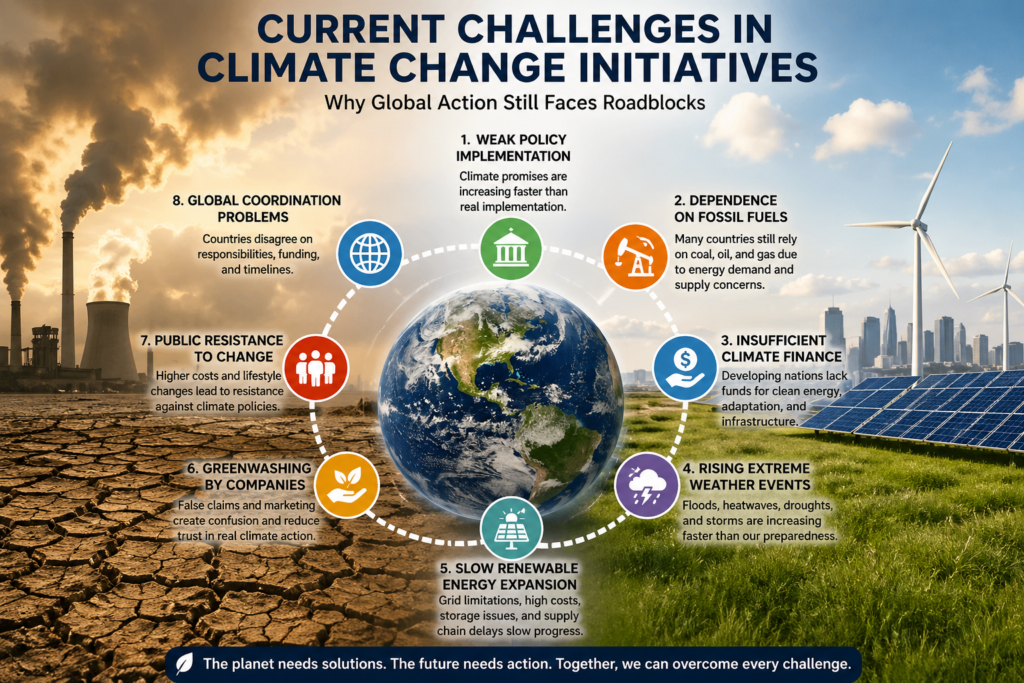
1. Weak Policy Implementation
Many countries have announced net-zero targets and carbon reduction goals. However, turning promises into action remains difficult. Some governments delay climate laws, reduce budgets, or change policies after elections.
Without stable long-term plans, businesses and investors hesitate to support clean energy projects.
Key Issue:
Climate promises are increasing faster than real implementation.
2. Dependence on Fossil Fuels
Coal, oil, and natural gas still power industries, transport, and electricity systems in many nations. Rapidly replacing fossil fuels requires time, money, and infrastructure.
Some countries continue to approve new oil and gas projects due to rising energy demand and global supply concerns.
Key Issue:
Energy security often competes with climate goals.
3. Insufficient Climate Finance
Developing countries need billions of dollars for renewable energy, flood protection, drought management, and green infrastructure. However, promised international climate funds often fall short.
Poorer nations face the highest climate risks but have the fewest resources.
Key Issue:
Climate action is unequal without fair financing.
4. Extreme Weather Events Rising
Floods, heatwaves, wildfires, cyclones, and droughts are becoming more frequent and severe. Many cities are unprepared with weak drainage systems, poor emergency planning, and limited healthcare response.
Key Issue:
Climate impacts are growing faster than adaptation efforts.
5. Slow Renewable Energy Expansion
Solar and wind energy are growing rapidly, but there are obstacles such as:
- Limited battery storage
- Weak electricity grids
- Delays in land approvals
- High upfront costs
- Supply chain shortages
Key Issue:
Clean energy growth must speed up to meet climate targets.
6. Greenwashing by Companies
Some companies advertise eco-friendly products or carbon-neutral goals without major changes to operations. This is known as greenwashing.
It creates confusion and reduces trust among consumers.
Key Issue:
Real climate action needs transparency and accountability.
7. Public Resistance to Lifestyle Changes
People support environmental protection, but some resist changes like:
- Higher fuel prices
- Plastic bans
- Public transport shifts
- Energy-saving restrictions
Key Issue:
Climate policies succeed only with public support.
8. Global Coordination Problems
Climate change is a worldwide issue, but countries often prioritize national interests. Disagreements continue over:
- Who should cut emissions first
- How much each nation should pay
- Trade rules for green products
- Technology sharing
Key Issue:
No country can solve climate change alone.
Conclusion
The world has the technology and knowledge to fight climate change. The biggest challenge now is taking action quickly, fairly, and together. Governments, businesses, and citizens must work as one to create a cleaner and safer future.
Climate change initiatives can succeed—but only if commitment becomes stronger than delay.
SEO Keywords:
current challenges in climate change initiatives, climate change problems 2026, global warming solutions, renewable energy challenges, climate action barriers, environmental issues today.
Leave a Reply